

The production process of a fruit and vegetable processing and preserving company can generate a share of packaged jams that do not pass conformity controls. This was the case for a company in the Verona area (Italy) operating in the sector, which produced a regular and predictable quantity of non-conforming packaged jams: 130 tonnes per year of finished product excluded from distribution, classified as organic waste and sent to biogas at a disposal cost of €176 per tonne.
Thanks to the industrial symbiosis partnership with Sfridoo, the Verona-based company reclassified the non-conforming packaged jams as a former foodstuff product under Regulation (EC) No 183/2005, directing them to the animal feed sector instead of biogas: this change in regulatory classification reduced the management cost from €176 per tonne to €110 per tonne (Sfridoo Case Study CS42).
| CS42 Sfridoo | Before | After | Notes and operational details |
|---|---|---|---|
| Case Study Overview | |||
| Industry | Region | Notes | |
| Waste producer | Processing and preserving of fruit and vegetables | Verona | |
| End user | Processing of other cereals (animal feed sector) | Venice | |
| Before / after comparison | |||
| Classification | Waste | Former foodstuff | Registration as a feed business operator via SUAP; new dedicated transport document (DDT) |
| Destination | Biogas | Animal feed sector | |
| Quantity | 130 tonnes/year | 130 tonnes/year | |
| Storage | Pallet | Pallet and dedicated labelling | Labelling compliant with animal feed destination requirements |
| Costs | −€176/tonne | −€110/tonne | Management cost reduction: €66/tonne (−€8,580/year) |
| Technological intervention | □ Yes ☑ No |
||
| Characteristics |
|
||
Non-conforming packaged jams as waste: costs and management burdens
The Verona-based jam producer generated a fixed quantity of non-conforming packaged jams, equal to 130 tonnes per year. This resulted in a steady flow: 130 tonnes/year of finished product excluded from the distribution chain, classified as organic waste and sent to biogas at a disposal cost of €176 per tonne, for a total burden of €22,880 per year. Managing the jams as waste also generated the administrative obligations associated with waste regulations: incoming and outgoing records, waste identification forms for each transport, and the relevant authorisations.
Non-conforming jams, however, are not processing scraps. They are finished products, already packaged on pallets, with a documented composition and a stable nutritional profile. The very characteristics that prevented their food distribution altered neither their composition nor their suitability as an ingredient for other supply chains. Despite this, they were handled with all the burdens applicable to waste.
What non-conforming packaged jams are and how they arise in the production process
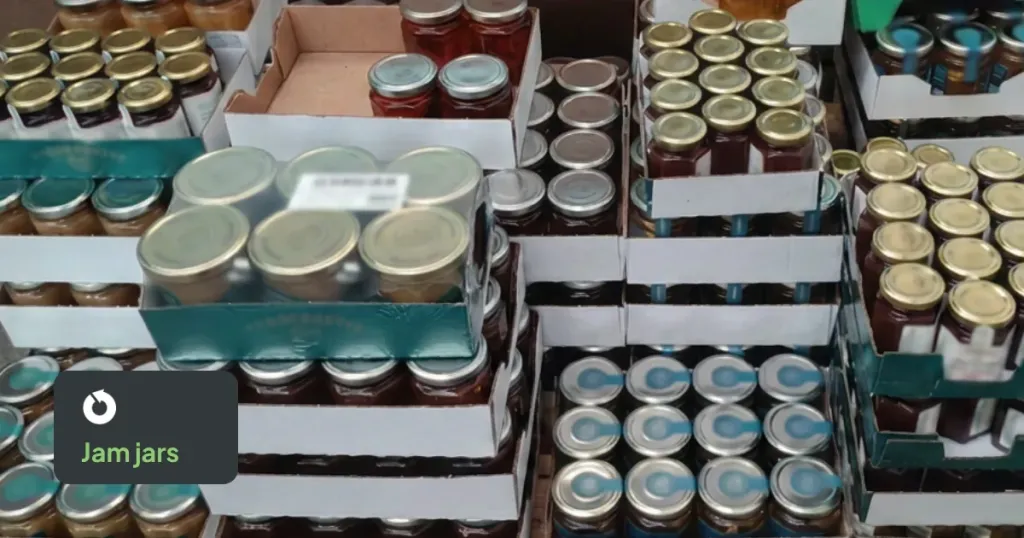
Non-conforming packaged jams are finished products that, while in most cases being fully suitable for food use, are excluded from the distribution chain for qualitative or commercial reasons. We can say that the main causes of non-conformity include labelling errors, packaging defects – such as incorrect seals, damaged or deformed packaging – deviations from quality parameters such as the Brix degree, set at 60 °Brix for standard jams, and aesthetic non-conformities that do not affect their nutritional properties.
The feature that distinguishes these residues from ordinary processing scraps is their nature as a finished product: they are already packaged, on pallets ready for distribution, and retain their original composition and nutritional profile intact.
Would you like to buy or sell organic waste?

Find out how to do this in a simple, sustainable and competitive way in the section on Pre-consumer Organic,, Agri-food waste and Biowaste on Sfridoo
Find out moreThe process of valorising non-conforming packaged jams
Following Sfridoo’s intervention, the company now manages the non-conforming packaged jams as a former foodstuff product, outside the scope of waste regulations.
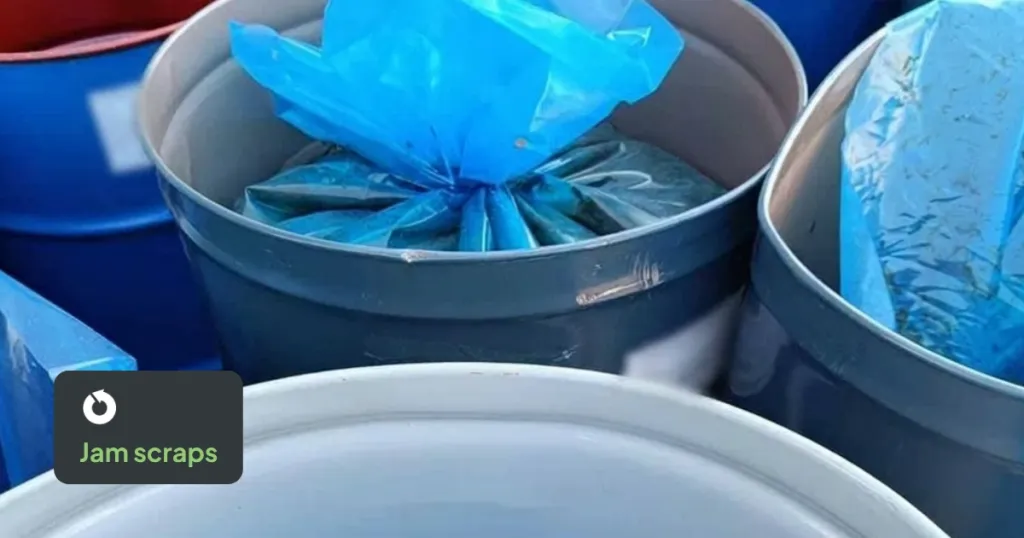
The outcome of the process is the complete exit from waste classification: the non-conforming jams are qualified as a former foodstuff under Regulation (EC) No 183/2005 and transferred to the animal feed sector as a raw material, specifically to a company in the Venice area. To manage the new flow, the Verona-based company obtained registration as a feed business operator via SUAP (the Italian one-stop business desk) and has a dedicated transport document (DDT) for traceability towards the animal feed recipient.
The benefits of packaged jams as a former foodstuff
The main economic effect is the reduction in the disposal cost of the material: from €176 per tonne to €110 per tonne, a saving of €66 per tonne equal to 37.5% of the previous cost. Based on 130 tonnes per year, the direct benefit is €8,580 per year (calculation basis: 130 tonnes/year × €66/tonne difference between the previous cost and the current cost).
From an environmental and reporting perspective, removing 130 tonnes/year from the organic fraction of the waste circuit produces a measurable improvement in environmental performance indicators: these are finished products, not processing scraps. The line “packaged products sent to biogas as organic waste” carries a disproportionate negative weight in sustainability reports and ESG assessments; the reclassification turns it into a transfer to a certified supply chain, with a direct effect on reporting.
In terms of operational governance, following the registration as a feed business operator via SUAP, the flow is traced with a dedicated DDT and the risk of non-compliance associated with waste management is eliminated at the root, not merely reduced.
Directing the material to the animal feed sector, rather than sending it to biogas as organic waste, valorises the intrinsic characteristics of the product: finished products with a documented composition and a stable nutritional profile. The shift also translates into a more favourable positioning in the company’s sustainability messaging towards its customers in the food industry.
Explore the ads on Sfridoo
Discover Sfridoo’s marketplace for free, where you can explore a wide range of waste material listings, with the opportunity to buy or sell them among thousands of companies in the network.
Enter the marketplace now