

In the steel bar production, wire manufacturing, heat and thermochemical treatment of steel components, plasma cutting of semi-finished steel products and sandblasting of steel sheets sectors, shot blasting, peening and thermal cutting operations continuously generate a residue in the form of iron oxide powder.
For some companies operating in these sectors, based in the Emilia-Romagna and Lombardy regions (Italy), managing iron oxide powder as waste could entail a disposal cost of up to €225,000 per year, calculated on the basis of a disposal cost of €150 per tonne and a constant volume of 1,500 tonnes per year.
Thanks to the Industrial Symbiosis partnership with Sfridoo, the iron oxide powder has been reclassified as a by-product under Article 184-bis of Legislative Decree 152/2006 and is now used in the production of oxides for the glass and ceramics industries: this change in regulatory classification has transformed a disposal cost into a revenue of €10 per tonne (Sfridoo Case Study CS43).
| CS43 Sfridoo | Pre | Post | Notes and operational details |
|---|---|---|---|
| Company profile | |||
| Sector | Province/Region | Notes | |
| Producer | Steel bar production; wire production; heat and thermochemical treatment of steel components; plasma cutting of semi-finished steel products; sandblasting of steel sheets | Emilia-Romagna and Lombardy (Italy) | Aggregated data across multiple companies |
| User | Production of oxides for the ceramics and glass industry | Reggio Emilia (Italy) | |
| Pre / post comparison | |||
| Classification | Waste | By-product | Prepared: technical report, by-product qualification form, supply agreement, declaration of conformity, management model |
| Destination | Recovery | Production of iron oxides | |
| Quantity | 1,500 tonnes/year | 1,500 tonnes/year | Illustrative quantity used as calculation basis for the valorisation |
| Storage | Big Bag | Big Bag | |
| Costs | −€150/ton | +€10/ton | From a disposal cost to a recognised positive value |
| Technological intervention | □ Yes ☑ No |
||
| Characteristics |
|
||
The management of iron oxide powder
Shot blasting, peening and thermal cutting operations on steel continuously and predictably generate iron oxide powder residue. For companies involved in the production of steel bars and wire, in heat treatment and in the plasma cutting of semi-finished steel products, this results in a constant flow of material treated as waste: 1,500 tonnes per year can incur disposal costs of €150 per tonne, amounting to an annual expenditure of €225,000 for disposal alone, without factoring in the other administrative burdens associated with waste.
Although it originates from different processes, iron oxide powder retains a constant composition and verifiable analytical characteristics (iron oxides ≥ 90% w/w), compatible with the same destination supply chain. Companies that turned to Sfridoo were nonetheless managing it with all the obligations associated with waste.
What is iron oxide powder and how is it generated in steel processing?
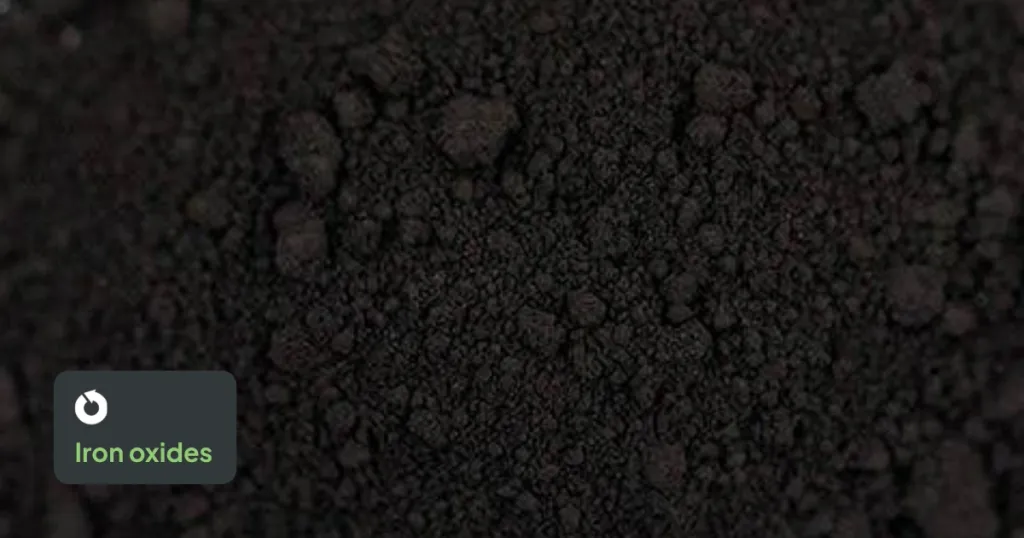
Iron oxide powder is the mixture of oxides that forms on the surface of steel components during the production of the semi-finished steel product (wire rod or sheet) or during heat treatments such as quenching, tempering and normalising. The exposure of steel to high temperatures in an oxidising atmosphere accelerates the reaction between the metal and oxygen, forming a crusty surface layer.
To remove this layer and prepare the component for subsequent processing stages, shot blasting and peening are used: the mechanical projection of metallic shot via turbines removes burrs and impurities, leaving a clean surface with improved fatigue resistance. This stage generates a residue in powder form, separated from the metallic abrasive by a two-stage air system that enables its recovery.
During the plasma cutting of semi-finished steel products, the high heat input and the interaction with the cutting gas generate fumes and metallic micro-particles that oxidise instantly: the cutting benches, equipped with dedicated extraction systems, convey these fumes to bag or cartridge filtration systems, from which a fine, homogeneous iron oxide powder is recovered.
The journey of iron oxide powder to becoming a by-product with Sfridoo
Following Sfridoo’s intervention, the companies involved now have a comprehensive set of documents enabling them to manage iron oxide powder as a by-product: technical report, by-product data sheet, supply contract with the purchaser, declaration of conformity and management template.
The analysis confirmed that the powder generated by the different processes — sandblasting, peening and plasma cutting — met the requirements of Article 184-bis of Legislative Decree 152/2006, confirming its classification as a by-product.
Iron oxide powder is no longer sent for recovery as waste, but is now utilised as a raw material for the production of oxides for the glass and ceramics industries, under a supply contract that regulates its transfer and guarantees its traceability.
Would you like to sell or buy scrap metal?

Find out how to do this in a simple, sustainable and competitive way in the section on scrap metal on the Sfridoo website
Find out moreI benefici degli ossidi di ferro in polvere come sottoprodotto
The first direct effect relates to material handling costs; indeed, companies that previously paid €150 per tonne to dispose of iron oxide powder as waste now eliminate this cost entirely, achieving a 100 per cent saving on disposal costs. Furthermore, they are paid €10 per tonne for the same material, now a by-product destined for the glass and ceramics supply chain. Based on the reference flow of 1,500 tonnes per year mentioned at the outset, this translates into an economic benefit of approximately €240,000 per year (€225,000 in avoided costs + €15,000 in new revenue).
The reclassification as a by-product has a direct impact on environmental accounting: iron oxide powder no longer appears among the waste declared in the annual balance sheet, an effect that companies certified to ISO 14001 or preparing a sustainability report can report directly among improved environmental performance indicators in ESG reporting.
At operational level, the new management model standardises material traceability flows across the different originating processes (sandblasting, peening, plasma cutting), with clearer procedures for plant staff and a lower risk of non-compliance with documentation requirements.
Once transferred to the glass and ceramics supply chain, iron oxide powder enters a value-added production process, an element that also strengthens the company’s positioning in the eyes of customers and business partners attentive to sustainability.
Would you like to reap the benefits of Industrial Symbiosis?
Discover the benefits of the Sfridoo marketplace
DISCOVER MARKETPLACE